

Online Couples Therapy vs. Other Support Options for Teen Parenting
The Distinct Role of Couples Therapy in Family Systems
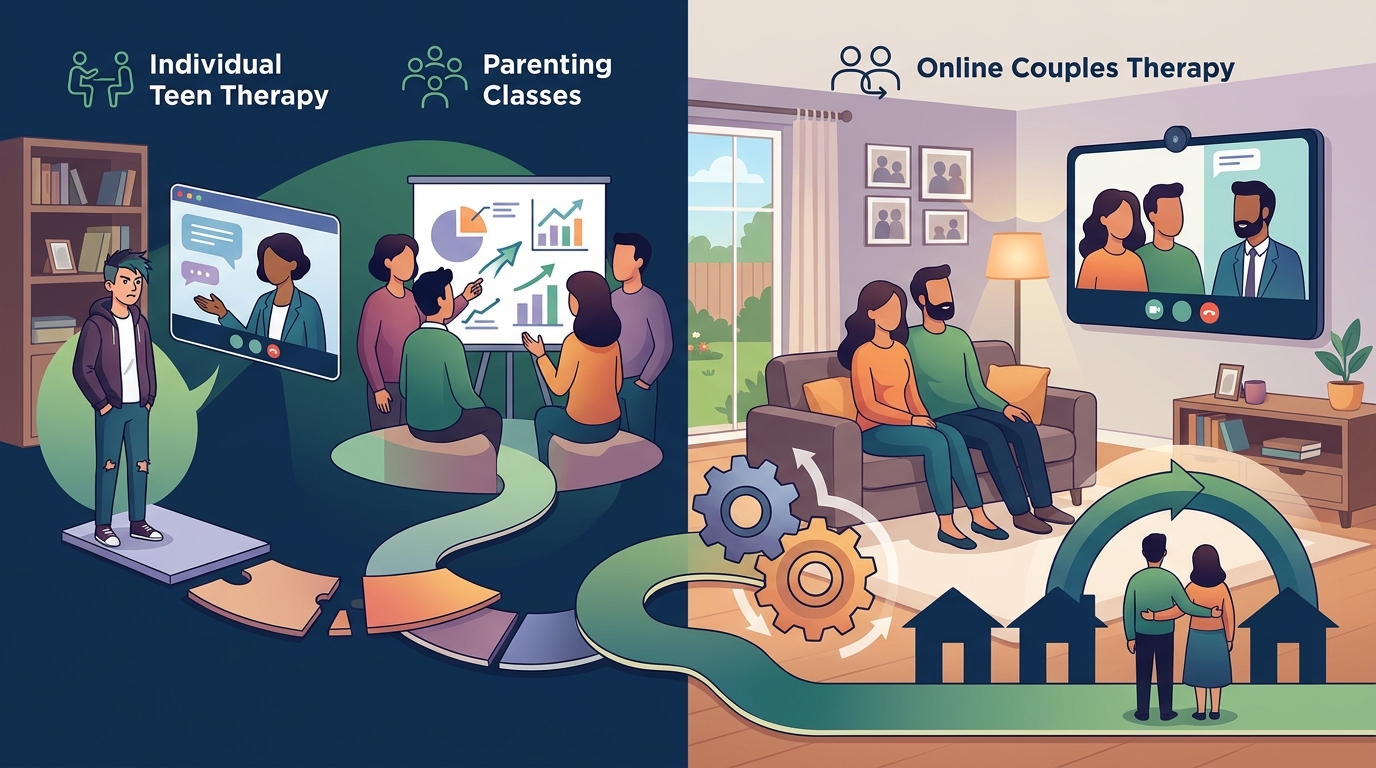
Many parents assume that if a teenager is struggling, the solution is individual therapy for the teen or general parenting classes. However, family systems theory suggests that the relationship between parents is the primary engine of the household. When partners are misaligned on discipline, values, or emotional support, the entire family system becomes unstable. Online couples therapy addresses this root cause by helping parents develop a unified front and a shared language for handling conflict.
For example, a couple might disagree on whether to allow a teen to attend a party after a recent incident. In individual therapy, each parent might process their own frustration separately, leading to inconsistent rules at home. In couples therapy, the therapist helps the partners negotiate a joint decision that respects both their concerns and the teen's developmental needs. This alignment reduces the triangulation where the teen is forced to take sides, a common dynamic in high-conflict households.
Comparison with Individual Parenting Support
Individual counseling for parents is valuable for processing personal stress, grief, or burnout. However, it does not directly address the communication breakdowns between partners. A parent might feel supported in their individual session but still return home to a partner who dismisses their concerns or undermines their authority. Online couples therapy bridges this gap by working directly with the partnership. It ensures that both parents are on the same page, which is critical when dealing with the intense emotions of adolescence.
Consider a scenario where one parent is highly anxious about their teen's safety, while the other is more permissive. Individual therapy might help the anxious parent manage their own worry, but it does not resolve the underlying disagreement. Couples therapy, on the other hand, facilitates a dialogue where both perspectives are validated and a compromise is reached. This collaborative approach builds trust between the partners, which in turn creates a more secure environment for the teenager.
Online Format vs. In-Person and Group Options
Traditional in-person therapy offers the benefit of face-to-face interaction, but it often comes with significant logistical hurdles. Commuting to a clinic, coordinating schedules, and finding childcare can make consistent attendance difficult, especially for busy families. Online couples therapy removes these barriers, allowing sessions to be held in the privacy of the home. This convenience can increase engagement and consistency, which are key factors in therapeutic success.
Group parenting classes are another common alternative. While these can provide general information and a sense of community, they lack the personalized attention needed to address specific family dynamics. A group setting may not be suitable for discussing sensitive issues like infidelity, severe behavioral problems, or deep-seated marital resentment. Online couples therapy offers a confidential, tailored environment where the therapist can focus exclusively on the unique challenges of that specific family. For families in rural areas or those with limited local resources, this accessibility is a significant advantage.
When to Consider Intensive or Retreat Formats
For some families, weekly sessions may not be enough to break entrenched patterns. In these cases, therapy intensives or retreats can be a powerful option. These formats compress a significant amount of clinical work into a short period, allowing for deeper exploration and faster progress. Mountain Family Therapy offers intensive options that can be particularly useful for couples who feel stuck in a cycle of conflict and want a focused period of work to reset their dynamic.
An intensive might involve several hours of therapy over a weekend, combined with time for reflection and integration. This format can be especially effective for couples who are dealing with a crisis, such as a teen's substance use or a major behavioral incident. The intensity of the work can help partners break through defenses and reach a level of understanding that might take months in weekly sessions. However, it is important to note that intensives are not a replacement for ongoing support; they are often used in conjunction with weekly therapy to maintain momentum.
Key Takeaways
- Online couples therapy focuses on the partnership between parents, which is the foundation of the family system.
- It differs from individual counseling by directly addressing communication and alignment between partners.
- The online format offers greater accessibility and privacy compared to in-person therapy.
- Group classes provide general information but lack the personalized attention needed for specific family issues.
- Therapy intensives can accelerate progress for families dealing with entrenched conflict or crisis.
- Choosing the right support option depends on the specific needs of the family and the nature of the challenges.
Frequently Asked Questions
Is online couples therapy as effective as in-person therapy?
Research suggests that online therapy can be just as effective as in-person therapy for many issues, including couples counseling. The key is the quality of the therapeutic relationship and the consistency of the work. For many families, the convenience of online sessions leads to better attendance and engagement, which can enhance outcomes.
Can couples therapy help if we are not fighting all the time?
Yes. Conflict is not the only indicator that couples therapy might be helpful. If you feel disconnected, are struggling to agree on parenting decisions, or are navigating a major life transition, couples therapy can help you strengthen your partnership and improve communication.
How long does online couples therapy typically take?
The duration of therapy varies depending on the complexity of the issues and the goals of the couple. Some couples may see significant improvement in a few months, while others may benefit from longer-term support. A therapist can help you set realistic expectations and goals for your treatment.
Do we need to be in the same location for online couples therapy?
No. One of the benefits of online therapy is that partners can join the session from different locations. This is particularly useful for long-distance relationships or when one partner is traveling for work.
What if one partner is not willing to attend couples therapy?
If one partner is unwilling to attend couples therapy, individual counseling or premarital counseling for the willing partner may be a good starting point. A therapist can help the individual work on their own patterns and communication skills, which may eventually encourage the other partner to join. In some cases, a therapist may offer a session with the willing partner to discuss strategies for engaging the other.
How does Mountain Family Therapy approach couples therapy for parenting teens?
Mountain Family Therapy uses an evidence-informed, practical approach to help couples strengthen their relationship and navigate the challenges of parenting teenagers. Our clinicians focus on communication, conflict resolution, and building a unified parenting team. We offer both weekly online sessions and intensive formats to meet the needs of different families.
Next Steps for Your Family
Choosing the right support for your family is a significant decision. If you are struggling with parenting your teenager and feel that your partnership is under strain, consider reaching out to a licensed therapist for a consultation. At Mountain Family Therapy, we offer a free consultation to help you determine if online couples therapy is the right fit for your situation. Our clinicians are experienced in working with families navigating the complexities of adolescence and can provide practical, evidence-based support to help you move forward.