

Choosing a therapist for your relationship is a significant decision that requires careful consideration of your specific needs and the provider's expertise. The right professional can help you navigate complex dynamics and rebuild trust effectively. This guide outlines the essential steps to ensure you find a licensed, compatible, and effective online couples therapist.
1. Define Your Specific Relationship Goals
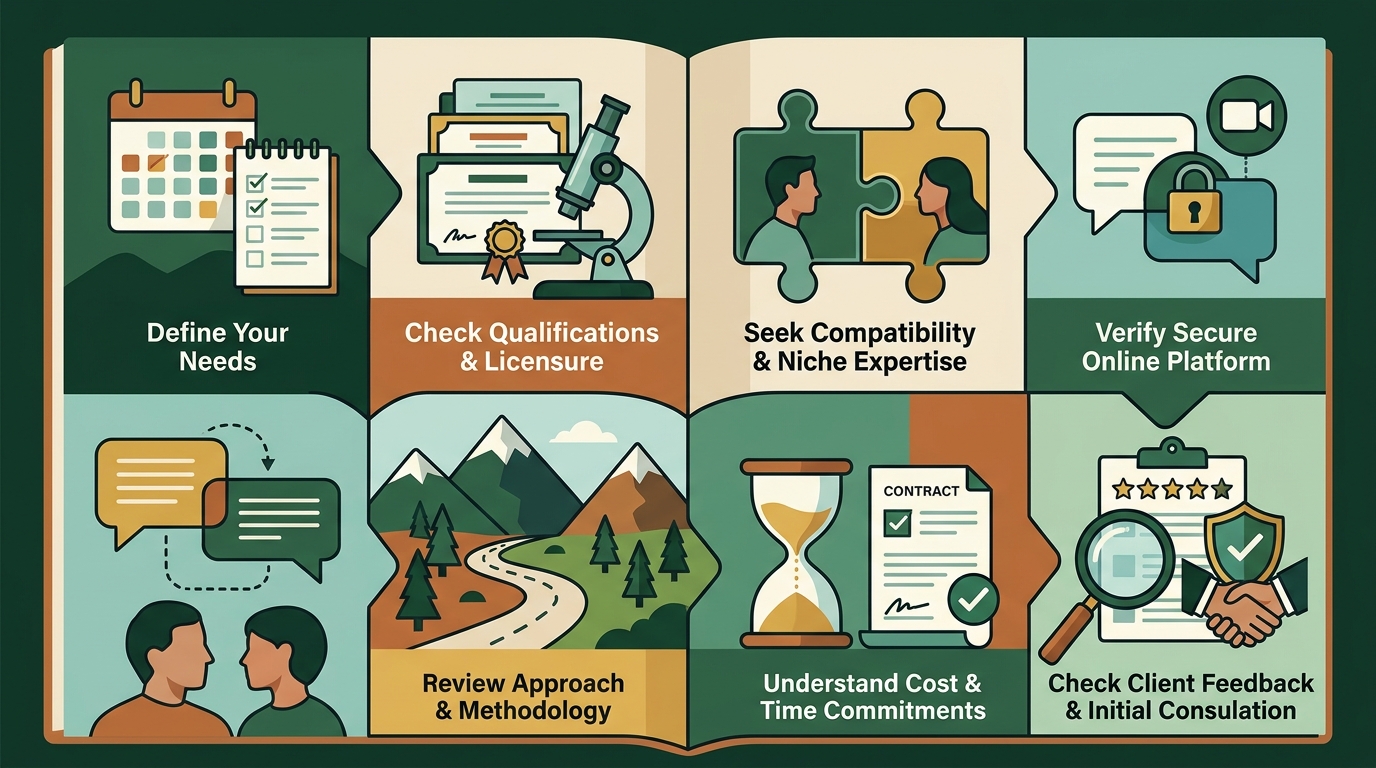
Clarity on your goals helps you filter for therapists with the right specialization. Before searching, identify whether you are dealing with communication breakdowns, trust issues, or life transitions. Specific goals allow you to match with a clinician who has experience in your particular area of concern. This initial step ensures that the therapy you receive is targeted and relevant to your situation.
2. Verify State Licensure and Telehealth Compliance
Ensure the therapist is legally licensed to practice in your state. Online therapy is regulated by state laws, so you must confirm that your provider holds an active license in the state where you are physically located. For example, couples therapy in Idaho requires clinicians to be licensed in Idaho to provide secure telehealth services. Verifying licensure protects your privacy and ensures you are receiving care from a qualified professional.
3. Assess the Therapist's Clinical Approach
Understanding the therapeutic model helps you determine if the style fits your needs. Different therapists use various evidence-based approaches, such as Emotionally Focused Therapy (EFT) or Cognitive Behavioral Therapy (CBT). You should review the therapist's bio to see which methods they employ and whether those align with your preferences. A good fit often depends on whether you prefer a more structured, skill-based approach or a deeper, exploratory process.
4. Evaluate the Logistics of Online Sessions
Practical details like scheduling and technology can impact your consistency. Consider the therapist's availability and whether their scheduling options fit your life. Also, ensure you are comfortable with the telehealth platform they use for secure video sessions. Reliable technology and flexible scheduling are crucial for maintaining momentum in your therapy journey.
5. Review Pricing and Insurance Coverage
Understanding the financial commitment helps you plan for long-term care. Many online couples therapy services are self-pay, meaning insurance may not cover the sessions. For instance, couples therapy in Illinois is often billed out of pocket at standard session rates. Knowing the cost upfront allows you to determine if the investment is sustainable for your budget over the required duration of treatment.
6. Conduct a Consultation to Gauge Fit
A free or low-cost consultation is the best way to assess personal chemistry. Use this initial conversation to ask questions about their experience with couples and their general philosophy. You should feel heard and respected during this call. If the interaction feels off, it is perfectly acceptable to look for another provider, as the therapeutic relationship is a key component of success.
7. Confirm the Scope of Practice and Boundaries
Ensure the therapist is comfortable working with both partners in the room. Some therapists specialize in individual work and may not offer couples sessions. Verify that the clinician is specifically trained and experienced in dyadic therapy. This step ensures that the professional is equipped to handle the unique dynamics of a partnership rather than just treating two individuals separately.
Choosing the Right Fit
When selecting among these steps, prioritize licensure and personal fit above all else. A therapist who is legally qualified and with whom you both feel comfortable is the most critical factor for a successful outcome. Use the other steps to refine your search and ensure the practical and clinical details align with your needs.
Frequently Asked Questions
Is online couples therapy as effective as in-person therapy?
Research suggests that online therapy can be just as effective as in-person sessions for many couples, provided there is a strong therapeutic alliance and reliable technology. according to How Do I
How do I know if my therapist is licensed in my state?
You can verify a therapist's license through your state's licensing board website or by asking the provider directly for their license number and state of practice.
What should I expect from a first session?
The first session typically involves an intake process where the therapist gathers background information and helps you define your goals for therapy.
Can I switch therapists if I don't feel a connection?
Yes, it is common and acceptable to switch therapists if you do not feel a good fit after the initial consultation or first few sessions.