

The Core Difference in Pacing
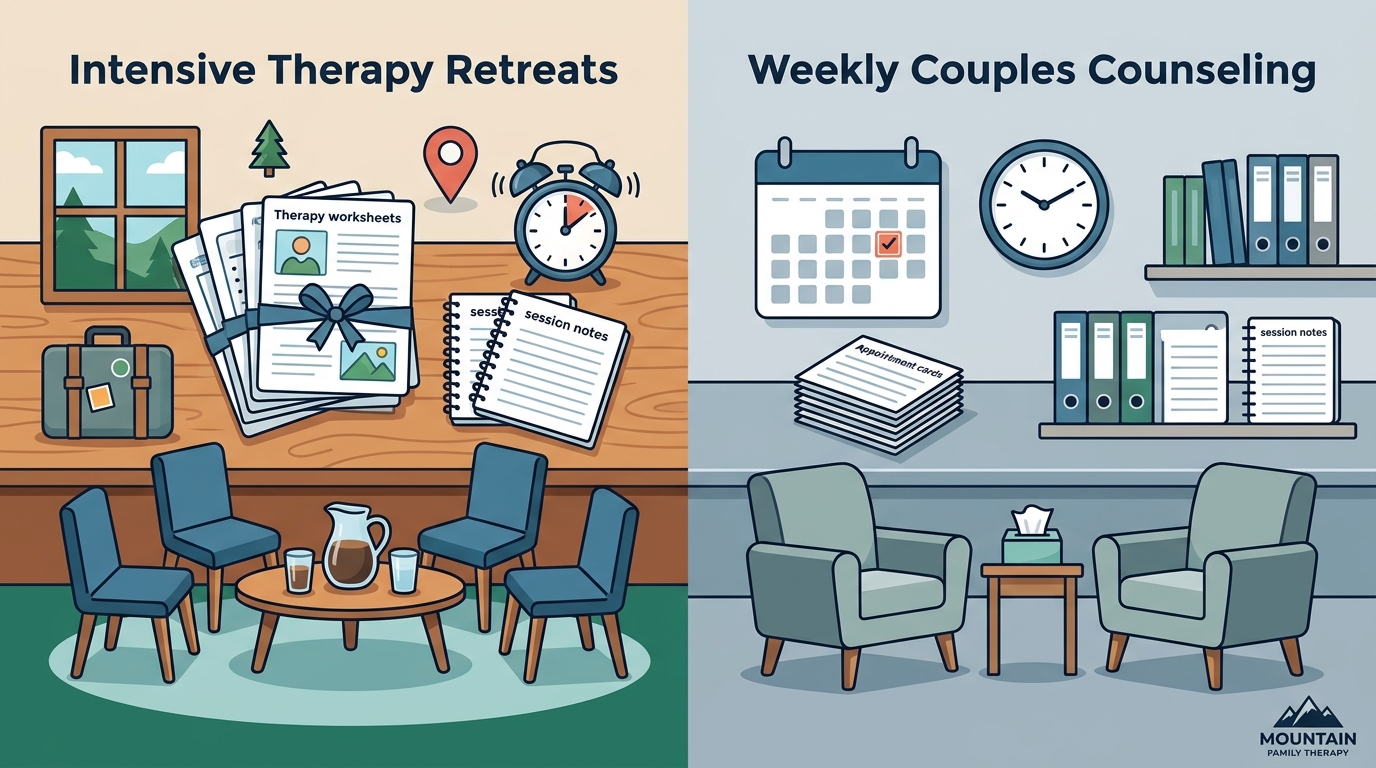
The primary distinction between these two modalities is the speed of engagement. Intensive therapy is a concentrated form of treatment that delivers multiple sessions over a short period, often spanning a few days. This approach allows couples to process deep-seated issues without the distraction of daily life. In contrast, weekly counseling is a traditional therapeutic model that meets once a week for a set duration. This slower pace allows for the integration of new behaviors into everyday routines. The choice between them often comes down to whether you need immediate relief or steady progress. For additional details, review the Customer Experience.
When Intensive Retreats Make Sense
Retreats are particularly effective when a relationship faces a critical rupture or a significant life transition. For example, a couple navigating the aftermath of an affair may benefit from the focused intensity of a retreat. The continuous nature of the sessions helps maintain momentum and emotional safety. Mountain Family Therapy offers custom intensives designed for these high-stakes moments. These programs provide a structured environment where partners can address core conflicts without the interruptions of work or family obligations. The implication is that retreats are best suited for couples who are ready to do the heavy lifting in a short window.
The Value of Weekly Consistency
Cost and Commitment Considerations
Financial and time commitments differ significantly between the two options. Intensive retreats often require a larger upfront investment but may reduce the total number of sessions needed. Weekly counseling involves a smaller per-session cost but requires a longer overall commitment. For example, a couple might spend several months in weekly therapy to achieve the same depth as a few days of intensive work. Mountain Family Therapy offers transparent pricing for both models, allowing couples to choose based on their budget. The key is to align the financial commitment with the expected outcomes and your personal capacity for change. For additional details, review the Frequently Asked Questions.
Choosing the Right Fit for Your Relationship
Key Takeaways
- Intensive therapy compresses sessions into a short timeframe for rapid progress. For additional details, review the About.
- Retreats are ideal for couples in crisis or facing major transitions.
- Weekly sessions are best for maintaining and strengthening stable relationships.
- Cost and time commitments vary significantly between the two models.
- Choosing the right fit depends on your specific relationship dynamics and goals.
Frequently Asked Questions
How long does an intensive therapy retreat typically last?
Intensive retreats usually span a few days, with multiple sessions per day. The exact duration depends on the specific program and the couple's needs.
Is weekly counseling effective for serious relationship issues?
Yes, weekly counseling is highly effective for serious issues. It provides the time and space needed to address deep-seated conflicts and build new patterns.
Can I switch from weekly counseling to an intensive retreat?
Yes, many couples start with weekly counseling and then transition to an intensive retreat for a deeper dive. This combination can be very effective.
What should I expect during an intensive therapy session?
Intensive sessions are focused and structured, often addressing specific issues in depth. They may involve more emotional intensity than weekly sessions.
How do I know which option is right for my couple?
Consider your current level of distress, your goals, and your capacity for sustained effort. A consultation with a therapist can help you make an informed decision.