
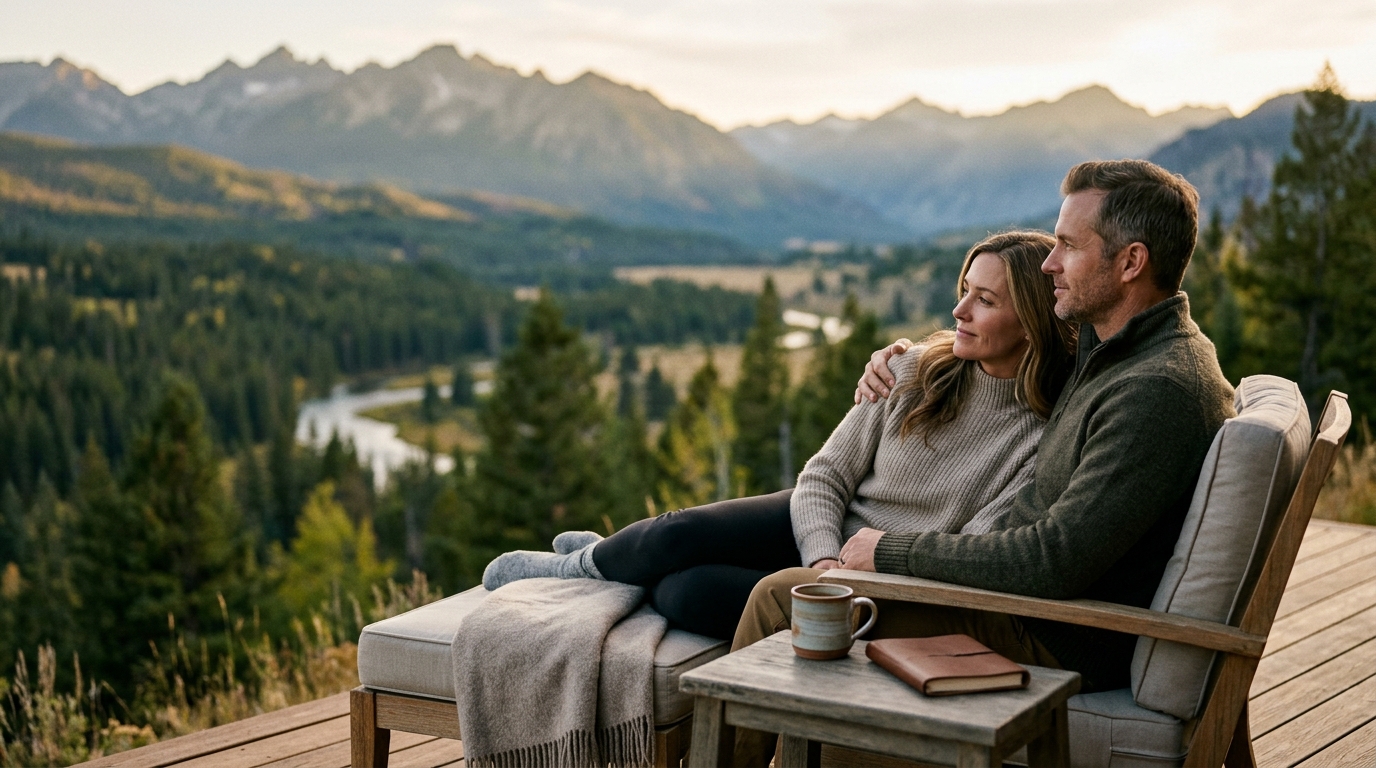
Choosing the right setting for relationship work in Idaho depends on whether you need clinical depth, outdoor immersion, or a balanced vacation experience. The options range from private clinical retreats to general wellness destinations. Understanding the clinical framework behind each choice helps you invest in the right type of support for your specific relationship goals.
1. Private Clinical Retreats at Riverfront Properties
Best for: Families and couples needing intensive, private clinical work in a scenic setting.
Mountain Family Therapy offers a private retreat format at a riverfront property outside Sandpoint in North Idaho. This option provides a dedicated space for clinical sessions without the distractions of group programming. The setting includes access to the lake and mountains, allowing for a genuine vacation feel while maintaining a strong therapeutic structure.
2. Travel-to-Home Intensive Formats
Best for: Couples who want clinical work in a location with personal meaning.
Some couples prefer to do their work in a place that holds specific emotional significance, such as a coastal area or a family ranch. A travel-to-home intensive format allows a clinician to come to your chosen destination. The clinical structure remains consistent, but the environment is tailored to the personal history of the people doing the work.
3. Wilderness and Outdoor Immersion Therapy
Best for: Individuals and couples seeking somatic processing through physical activity.
Wilderness therapy involves multi-day movement through wild terrain, such as paddling or backcountry hiking. This format is particularly effective for trauma work, as it allows the body to enter and complete somatic states that are difficult to achieve in a standard office hour. The physical challenge serves as a parallel to the emotional work being processed.
4. General Family Wellness Retreats
Best for: Families seeking rest and connection without clinical intervention.
General wellness retreats in Idaho focus on hospitality, yoga, and group activities rather than clinical therapy. These programs are well-suited for families who want a structured, supportive trip with built-in wellness practices. They are not a substitute for clinical therapy but can be valuable for general restoration and connection.
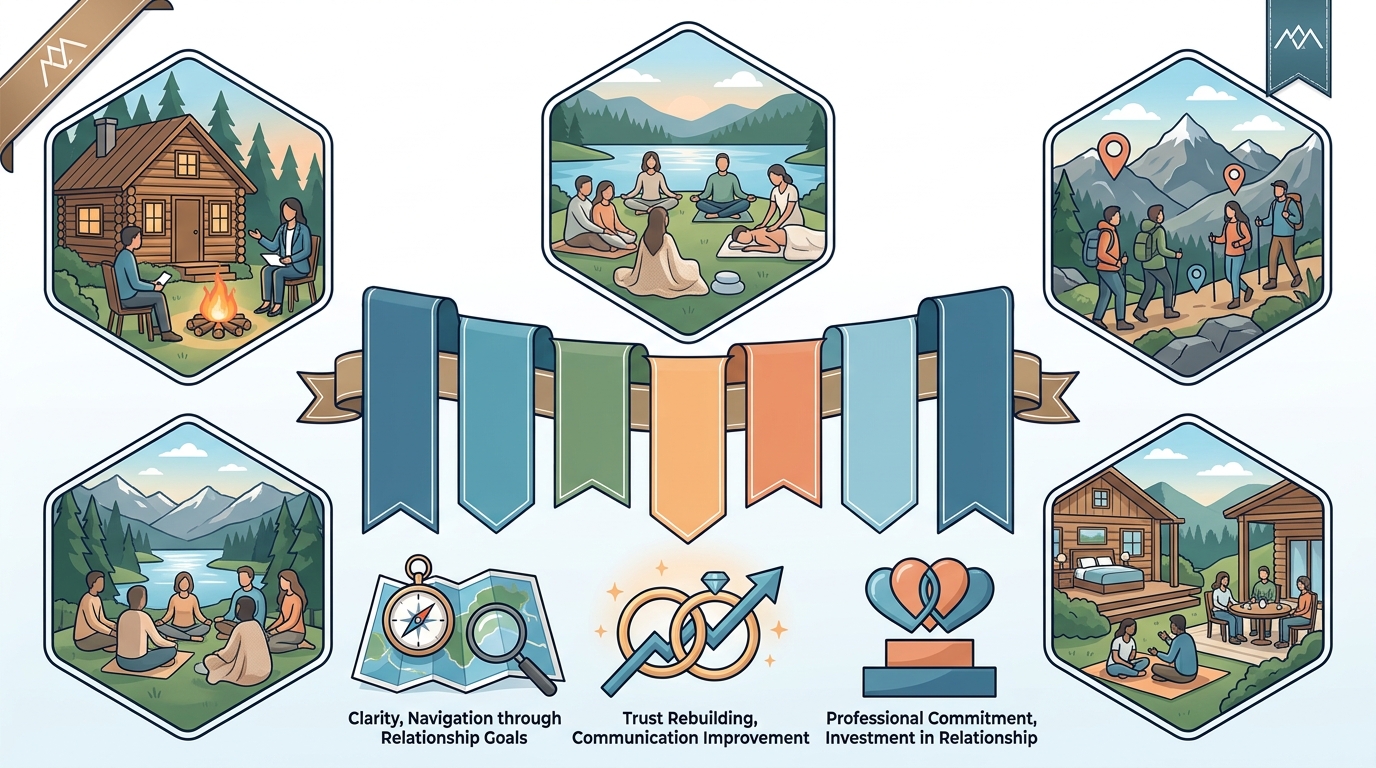
5. Online Telehealth Therapy with Local Clinicians
Best for: Couples in Idaho who prefer the convenience of home-based sessions.
For those who do not need a physical retreat, licensed online therapy provides a practical alternative. Mountain Family Therapy serves clients across Idaho through secure telehealth, offering the same clinical depth in a familiar environment. This option is ideal for steady, ongoing progress without the time commitment of a multi-day trip.
6. Therapeutic Family Vacations
Best for: Families who want to integrate clinical work into a real trip.
A therapeutic family vacation weaves clinical structure into a genuine family experience. It is not therapy that interrupts the vacation, nor is it a vacation pretending to be therapy. This format is designed for families who want focused time on relationships in a setting that makes the work easier and the trip itself worth taking.
7. Self-Paced Online Courses and Apps
Best for: Couples who want to build skills at their own pace.
Therapist-built online courses and free apps provide structured tools for communication and connection. These resources allow couples to work through specific topics, such as conflict resolution or trust repair, on their own schedule. They are a low-stakes entry point for those not yet ready to book a therapist or travel to a retreat.
Choosing the Right Option
Select the option that matches your current level of distress and your need for privacy. If you are in active crisis or need deep trauma work, a private clinical retreat or wilderness format is often the most effective. If you are looking for general maintenance or skill-building, online therapy or self-paced courses may be sufficient.
Frequently Asked Questions
Is a wellness retreat the same as a therapy retreat?
No. A wellness retreat is an experiential program with a hospitality framework, while a therapy retreat is a clinical product with defined goals and licensed clinicians. The clinical depth and structure differ significantly between the two.
Does insurance cover couples retreats in Idaho?
Generally, insurance does not cover couples therapy or retreats. These services are typically billed out of pocket. You should confirm specific coverage details with your provider before booking.
How long does a typical couples retreat last?
Retreats vary in length, but intensive formats often span several days. The duration depends on the specific clinical goals and the structure of the program chosen.
Can we do therapy in a location of our choice?
Yes. Some practices offer travel-to-home intensive formats where a clinician travels to a destination chosen by the couple. This allows the work to happen in a setting that has personal meaning.
What is the difference between a vacation and a therapeutic vacation?
A therapeutic vacation includes a real clinician and clinical structure woven into the trip. It is designed for focused relational work, whereas a standard vacation focuses on leisure and rest without a clinical framework.