

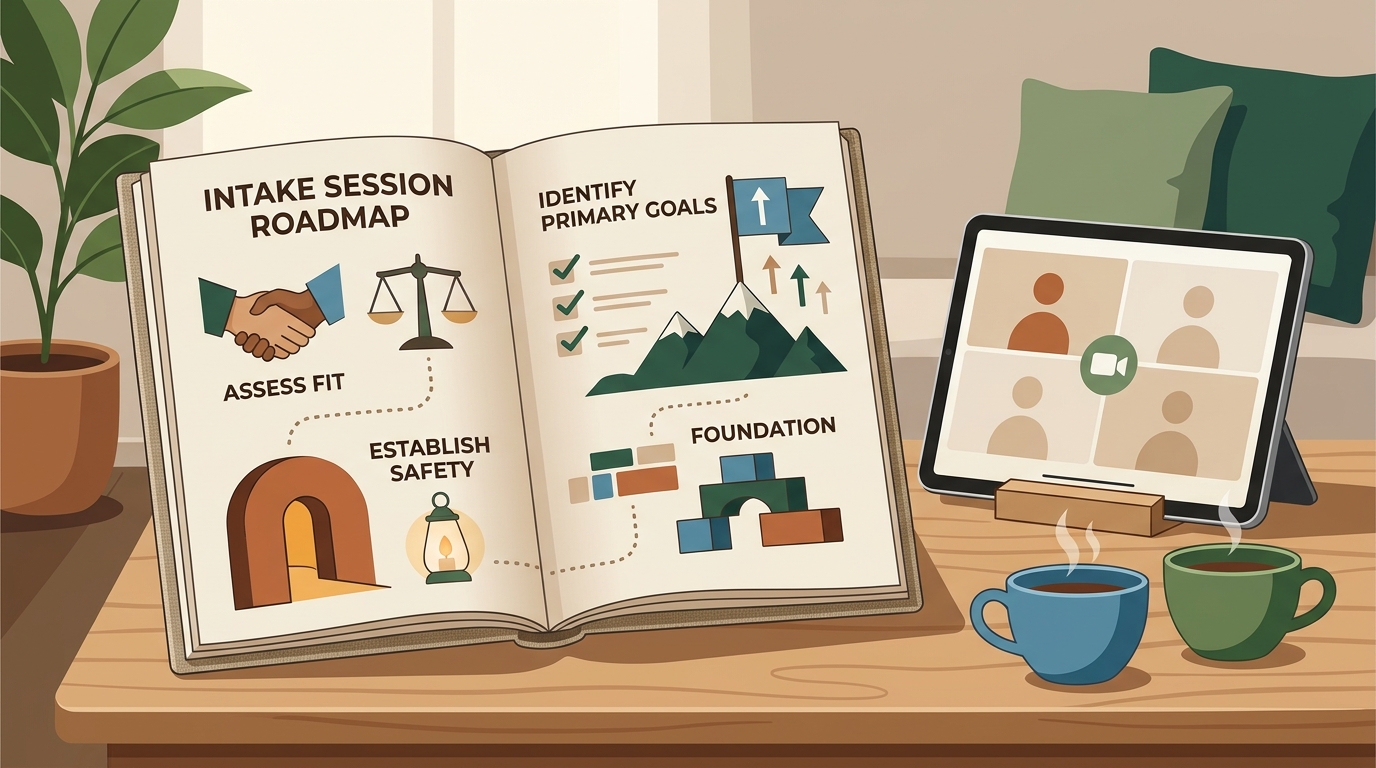
Your first online couples counseling session is a structured intake designed to assess fit, establish safety, and identify primary goals. It is not a deep dive into every past conflict, but a foundational step to determine if the therapist and modality are right for your relationship. At Mountain Family Therapy, this initial meeting focuses on understanding your unique dynamic and creating a practical roadmap for change.
The Logistics of Telehealth Couples Therapy
Online therapy removes geographical barriers, allowing couples to access care from their own homes. A qualitative study published in PubMed found that the majority of couples found the videoconferencing experience beneficial and positive, despite initial concerns. For many, the reduced physical intensity of a virtual room helps keep discussions focused on content rather than overwhelming emotion. This environment can be particularly useful for couples who find in-person sessions too charged or who live in different locations.
Before the session begins, you will typically receive a secure link to join the video call. It is important to test your technology beforehand to ensure a stable connection. At Mountain Family Therapy, clinicians are trained in evidence-based approaches like Emotionally Focused Therapy (EFT) and Cognitive Behavioral Therapy (CBT), which translate well to a digital format. The goal is to create a calm, private space where both partners feel safe to speak honestly.
Building Safety and Establishing Ground Rules
The primary objective of the first session is to establish a sense of safety. Therapeutic alliance is the collaborative relationship between the therapist and clients, which is the strongest predictor of positive outcomes in psychotherapy. In the first hour, the therapist will spend significant time listening to each partner's perspective without judgment. This phase is about creating a container where difficult truths can be shared without immediate retaliation or defensiveness.
The therapist will also set ground rules for communication. These might include guidelines on how to interrupt, how to handle strong emotions, or how to manage time if one partner dominates the conversation. For couples dealing with high conflict, these rules are essential. They provide a structure that prevents the session from devolving into the same old arguments. The therapist acts as a neutral facilitator, ensuring both voices are heard and that the conversation remains constructive.
Assessing Fit and Defining Goals
Not every couple is a good fit for couples therapy, and the first session is where this is determined. The therapist will ask about your specific goals: Are you trying to repair trust after a betrayal? Are you navigating a life transition? Are you stuck in a cycle of criticism and withdrawal? Discernment counseling is a specific format used when one partner is unsure about staying in the relationship. In these cases, the first session helps clarify whether the goal is reconciliation or a clear decision to separate.
The therapist will also assess the level of distress and the presence of any safety concerns. If there is active domestic violence or abuse, the therapist will explain that couples therapy is not appropriate and will refer you to individual safety planning. For most couples, the therapist will outline a preliminary treatment plan. This plan might involve weekly sessions, specific homework assignments, or a more intensive format if the issues are complex. Understanding this plan helps you set realistic expectations for the journey ahead.
Addressing Common Misconceptions About Online Care
A common misconception is that online therapy is less effective than in-person care. A systematic review in PMC indicates that online relationship education and therapy can be as effective as face-to-face interventions, particularly when logistical barriers are a concern. The key is the quality of the therapeutic relationship, not the medium. Many couples report that the ability to pause, take a breath, or step away briefly during a virtual session actually helps them regulate their emotions better than in a physical office.
Another misconception is that the therapist will take sides. A good couples therapist remains neutral and focuses on the interaction between partners, not on judging who is "right" or "wrong." The therapist's role is to help you understand the patterns that keep you stuck. By identifying these patterns, you can begin to break them. This process requires honesty and a willingness to be vulnerable, which is why the initial safety-building phase is so critical.
Key Takeaways
- The first session is an intake to assess fit, safety, and goals, not a deep dive into every past conflict.
- Online therapy is a validated modality that many couples find beneficial for maintaining focus and reducing emotional overwhelm.
- Establishing ground rules for communication is a core part of the first session to ensure safety and structure.
- The therapist will help clarify whether your goal is reconciliation, separation, or further discernment.
- Therapeutic alliance, or the bond with your therapist, is the most important factor in successful treatment.
- Online sessions require a stable internet connection and a private space for both partners.
Frequently Asked Questions
How long is the first online couples counseling session?
Most initial sessions last between 50 and 60 minutes. This time is used for introductions, assessing the couple's dynamic, and discussing initial goals. Some practices may offer a shorter consultation call before the full intake session.
Do both partners need to be in the same location?
No. One of the benefits of online therapy is that partners can join from different locations. However, both must be in a private, quiet space where they can speak freely without interruption.
What if I am not sure if I want to stay in the relationship?
This is a common reason for seeking therapy. A therapist can offer discernment counseling, which is a time-limited process designed to help you make a clear decision about the future of the relationship.
Is online therapy as effective as in-person therapy?
Research suggests that online therapy can be just as effective as in-person therapy for many issues, including relationship distress. The effectiveness depends largely on the quality of the therapeutic relationship and the client's comfort with the medium. according to How Effective is
What should I do if I feel overwhelmed during the session?
You can ask the therapist to pause or slow down. In an online setting, you can also step away from the screen for a moment to breathe. A good therapist will support you in managing your emotional state during the session.
How do I know if the therapist is a good fit?
Fit is often determined in the first one or two sessions. You should feel heard, respected, and safe. If you feel judged or unsafe, it is okay to discuss this with the therapist or to seek a different provider.
Next Steps for Your Relationship
Starting couples therapy is a brave step toward change. The first session is your opportunity to see if the therapist and the online format work for you. If you are ready to begin, Mountain Family Therapy offers a free consultation to help you understand fit, availability, and whether online therapy is a good next step for your situation. You can call or text us to start the conversation.